


Choosing Professional Broadcasting Platforms: What Actually Matters
Beyond Features Lists and Marketing Promises
Selecting the right technology partner for your virtual events feels overwhelming. Every platform claims to be "enterprise-grade," "feature-rich," and "easy to use." Sales pages overflow with impressive specifications and competitive comparisons.
But here's the reality: most platforms can technically broadcast your event. The real question isn't whether they can stream—it's whether they'll help you create experiences audiences actually value.
What Separates Good from Great
Reliability Under Pressure
Your annual conference goes live in minutes. Thousands of registered attendees are waiting. This is precisely the worst moment to discover your platform can't handle the load.
Professional live event streaming services prove their worth during peak demand, not controlled demos. Look for platforms with proven track records at scale. Ask about infrastructure redundancy. Understand their contingency plans when things go wrong—because eventually, something always does.
The difference between amateur and professional solutions becomes painfully obvious during actual events. Buffering during keynote speeches. Audio sync issues during panel discussions. Complete failures during product launches. These disasters don't just frustrate viewers—they damage your brand's credibility.
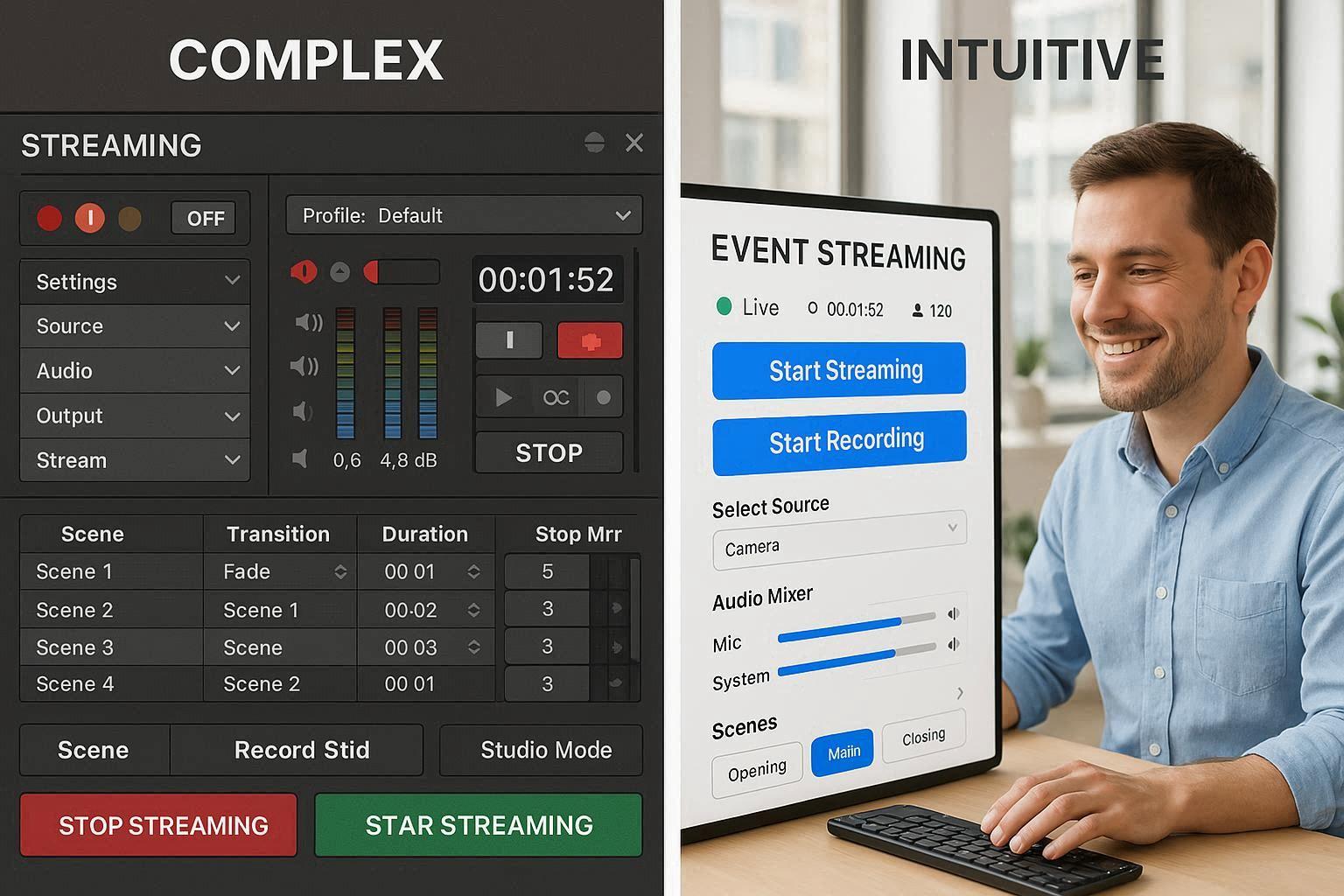
Intuitive Operation for Non-Technical Teams
Event organizers shouldn't need computer science degrees to broadcast professionally. Your team already manages speakers, coordinates schedules, handles registrations, and oversees logistics. Adding complex technical operations creates unnecessary stress.
The best platforms feel intuitive from first use. Controls make sense. Workflows feel logical. Help documentation actually helps. This ease of operation matters enormously when you're managing dozens of moving parts simultaneously during live events.
Features That Actually Impact Outcomes
Engagement Tools That Work
Interactive capabilities distinguish compelling virtual events from boring webinars. But not all interaction features deliver equal value.
Quality live streaming video platforms offer engagement tools that feel natural rather than gimmicky. Real-time Q&A that speakers can actually manage. Polls that reveal insights without overwhelming sessions. Chat moderation that maintains productive conversations without constant intervention.
These features should enhance your content, not distract from it. If interaction feels forced or complicated, audiences won't use it—leaving you with passive viewers who might as well be watching recordings.
Analytics That Inform Strategy
Viewer counts only tell part of the story. Comprehensive analytics reveal who attended, how long they watched, which segments generated the most engagement, and where people dropped off.
This data transforms future events. You discover that 15-minute segments maintain attention better than 45-minute presentations. You learn that interactive polls every 10 minutes boost completion rates. You identify topics that resonate versus those that lose audiences.
The Hidden Costs Nobody Mentions
Pricing structures vary wildly between platforms. Some charge per viewer. Others per minute streamed. Some include analytics; others charge separately. Enterprise features might require expensive tier upgrades.
Calculate total cost of ownership, not just base pricing. Factor in bandwidth charges, storage fees, and premium feature costs. Understand commitment terms and cancellation policies. The cheapest option often becomes expensive once you need actual capabilities.
Making the Strategic Choice
Your platform becomes your virtual venue. It shapes first impressions, enables interactions, and determines whether technical execution enhances or undermines your content.
Choose based on reliability, usability, and alignment with your specific needs—not feature counts or marketing promises.
- Travel
- Equality
- Faith & Spirituality
- Beauty
- Writing
- Gaming
- Film
- Music
- Tech
- Self Improvement
- Relationships
- Programming Languages
- Data Science
- Sicurezza
- Blockchain
- Spirituality
- Formazione
- Life
- Productivity
- Culture
- U.s Politics
- Health Politics
- Climate & Environment
- International
- Humor
- Philosophy
- Cronologia
- Mindfulness
- Relationships
- Creator Economy
- Business
- Marketing
- How To
- Lifestyle
- Art
- Causes
- Crafts
- Dance
- Drinks
- Film
- Fitness
- Food
- Giochi
- Gardening
- Health
- Home
- Literature
- Music
- Networking
- Altre informazioni
- Party
- Religion
- Shopping
- Sports
- Theater
- Wellness
 Italiano
 English
 Arabic
 French
 Spanish
 Portuguese
 Deutsch
 Turkish
 Dutch
Dutch
 Russian
 Romaian
 Portuguese (Brazil)
 Greek
Greek