


Mastering Virtual Events: A Strategic Guide for Modern Broadcasters
The Shift from Traditional to Digital Gatherings
Five years ago, hosting a global conference meant months of venue bookings, travel arrangements, and logistical nightmares. Today, that same conference can reach millions from a single studio—or even your home office.
The transformation isn't just about convenience. When organizations embrace event streaming live, they unlock possibilities that physical venues simply can't match. Instant global reach. Real-time analytics. Interactive features that make every attendee feel heard.
But here's what most people miss: successful virtual events aren't about recreating in-person experiences online. They're about leveraging digital advantages to create something entirely new.
Building Authentic Connections Through Screens
The Psychology of Virtual Engagement
Humans crave connection. Whether we're gathered in an auditorium or watching from our couches, we want to feel part of something bigger. Smart broadcasters understand this fundamental need and design experiences accordingly.
Consider how the best virtual events make you forget you're watching alone. Chat rooms buzz with conversation. Polls make you feel heard. Speakers acknowledge viewer comments in real-time. These moments create community, even when participants are continents apart.
Technical Foundation for Success
Professional broadcasting requires more than a decent webcam. Sound quality matters more than video resolution—viewers forgive pixelated images but won't tolerate poor audio. Lighting transforms amateur streams into professional productions. Stable internet prevents those awkward freezes that break immersion.
Yet technology should never overshadow content. The best platforms for live video online feel invisible, letting your message take center stage while handling complex broadcasting tasks behind the scenes.
Strategies That Drive Results
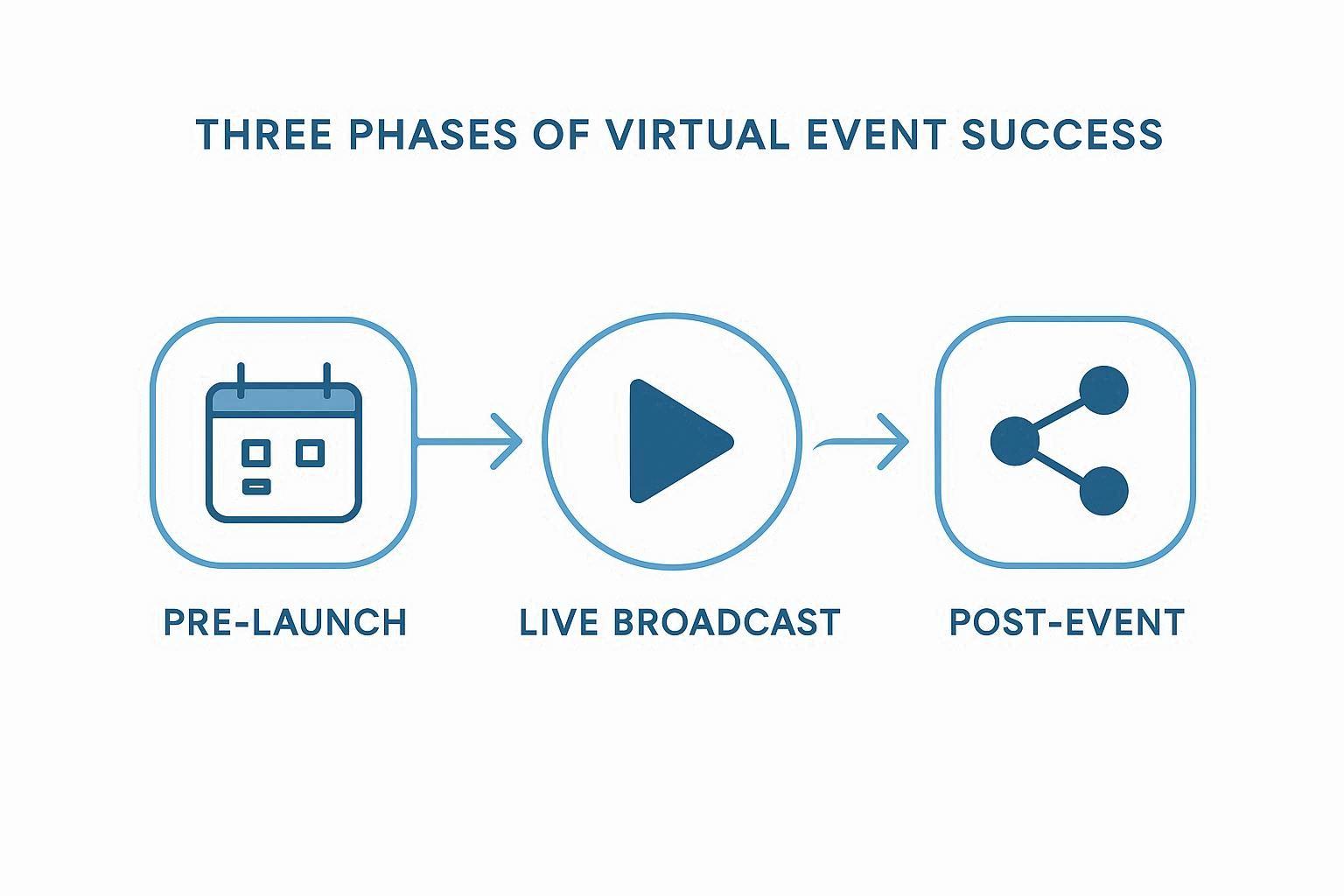
Pre-Launch Preparation
Success begins long before you go live. Test every piece of equipment twice. Run through your entire program, including transitions. Brief speakers on engagement techniques specific to virtual formats. Create backup plans for technical failures.
Build anticipation through strategic teasers. Share behind-the-scenes content. Announce special segments. Give audiences compelling reasons to mark their calendars.
During Your Broadcast
Energy translates through screens differently than in person. Speak directly to the camera, not your monitor. Vary your pacing to maintain attention. Include interactive elements every 7-10 minutes—questions, polls, or breakout sessions.
Monitor engagement metrics without becoming distracted. Assign team members to manage chat, handle technical issues, and coordinate speakers. This division of labor keeps your broadcast smooth and professional.
Post-Event Optimization
Your content's value extends beyond the live broadcast. Edit recordings into highlight reels. Create blog posts summarizing key insights. Share memorable quotes on social media. This multi-channel approach maximizes your investment while reaching audiences who couldn't attend live.
The Future Belongs to Hybrid Experiences
Virtual broadcasting isn't replacing traditional events—it's enhancing them. Forward-thinking organizations combine in-person energy with digital reach, creating hybrid experiences that offer the best of both worlds.
As technology evolves and audiences become more comfortable with virtual formats, the opportunities only expand. The question isn't whether to broadcast your events, but how to make them unmissable.
- Travel
- Equality
- Faith & Spirituality
- Beauty
- Writing
- Gaming
- الأفلام
- Music
- Tech
- Self Improvement
- Relationships
- Programming Languages
- Data Science
- الحماية
- Blockchain
- Spirituality
- التعليم
- Life
- Productivity
- Culture
- U.s Politics
- Health Politics
- Climate & Environment
- International
- Humor
- Philosophy
- السجل
- Mindfulness
- Relationships
- Creator Economy
- Business
- Marketing
- How To
- Lifestyle
- Art
- Causes
- Crafts
- Dance
- Drinks
- Film
- Fitness
- Food
- الألعاب
- Gardening
- Health
- الرئيسية
- Literature
- Music
- Networking
- أخرى
- Party
- Religion
- Shopping
- Sports
- Theater
- Wellness
 Arabic
 English
 French
 Spanish
 Portuguese
 Deutsch
 Turkish
 Dutch
Dutch
 Italiano
 Russian
 Romaian
 Portuguese (Brazil)
 Greek
Greek