


How to Improve Air Quality in Your Home
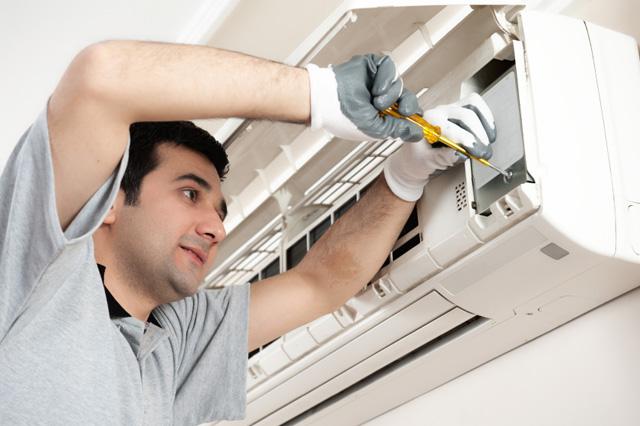
Indoor air can look perfectly clean while containing dust, fine particles, allergens, odors, and other pollutants that affect comfort. Since most people spend much of their time indoors, understanding Air Quality is not simply a matter of comfort—it is part of maintaining a healthier, better-functioning home.
The challenge is that poor indoor air quality rarely announces itself. A room may have no obvious odor or visible haze, yet still have inadequate ventilation or excessive airborne particles. The right approach is therefore not to buy the first air cleaner you see. It is to identify the likely sources of pollution, understand how your HVAC system moves air, and then choose solutions that address the actual problem.
What Causes Poor Indoor Air Quality?
Indoor pollution comes from more sources than most homeowners realize. Outdoor pollutants can enter through doors, windows, and ventilation systems, while everyday household activities generate contaminants indoors.
Common sources include:
-
Dust and dust-mite particles
-
Pet dander
-
Pollen brought indoors
-
Mold spores from damp areas
-
Smoke and combustion byproducts
-
Cleaning products and aerosols
-
Cooking particles and grease
-
Building materials and furnishings that release volatile organic compounds (VOCs)
-
Poorly maintained HVAC equipment
-
Inadequate outdoor-air ventilation
Humidity also matters. Excess moisture can encourage mold growth, while very dry conditions can increase irritation and make some occupants more uncomfortable.
The key point is that indoor air problems are usually multi-source problems. Installing a filter may reduce airborne particles, for example, but it will not solve excessive humidity or eliminate a pollutant being continuously generated inside the home.
That is why a useful assessment starts with the source rather than the product.
How Can You Tell If Your Home Has an Air Quality Problem?
Some warning signs are obvious. Others are easy to dismiss because they appear to be ordinary household issues.
Persistent musty odors, recurring dust shortly after cleaning, visible condensation, unusual humidity, or rooms that feel stuffy can all justify a closer look. People may also notice that certain rooms feel less comfortable than others, particularly bedrooms, basements, kitchens, or spaces with limited ventilation.
A practical home assessment should consider five areas:
-
Particle levels: Is there excessive dust, pollen, smoke, or other airborne particulate matter?
-
Humidity: Is indoor moisture consistently too high or too low?
-
Ventilation: Is enough outdoor air entering the building?
-
Pollutant sources: Are cooking, cleaning, combustion, pets, or building materials contributing contaminants?
-
HVAC performance: Are filters, coils, ductwork, and air-handling components properly maintained?
For larger or more complicated problems, professional testing can provide useful information that visual inspection cannot. Depending on the situation, testing may involve particulate matter, carbon monoxide, humidity, or other specific contaminants.
However, testing should have a purpose. Measuring everything simply because a device can measure it does not necessarily lead to a better solution. Good indoor-air management connects measurements to a practical corrective action.
What Should You Look for in Air Purification Systems?
Air purification systems can be useful, but different technologies solve different problems. The most important question is not “Which purifier is best?” It is “Which type of filtration or treatment matches the pollutant I am trying to control?”
For airborne particles, mechanical filtration is often the starting point. High-efficiency filters can capture a significant proportion of particles that pass through them, provided the HVAC system can handle the filter's airflow resistance.
Portable air cleaners can also help in individual rooms. Their effectiveness depends on factors such as:
-
Clean air delivery rate (CADR)
-
Room size
-
Filter efficiency
-
Operating speed
-
How long the unit runs
-
Whether doors and windows are open
-
How frequently filters are replaced
A purifier that is technically powerful but operated only occasionally may accomplish less than a properly sized unit running consistently.
Some systems use activated carbon to help reduce certain odors and gaseous pollutants. Carbon performance depends heavily on the quantity and quality of the carbon media, so a thin carbon layer should not be treated as a universal solution for every chemical contaminant.
Ultraviolet technologies are another category. These systems are generally intended for specific biological-control applications and must be properly designed and installed. They should not be viewed as a replacement for source control, ventilation, filtration, or humidity management.
In other words, air purification is one part of an indoor-air strategy—not the entire strategy.
Why HVAC Maintenance Has Such a Big Impact
Your HVAC system is one of the largest pieces of equipment influencing the air that circulates through your home. When it is maintained properly, it can support filtration, temperature control, humidity management, and air movement. When neglected, it can become part of the problem.
A basic maintenance routine should include regular filter inspection and replacement according to the manufacturer's guidance and actual household conditions. Homes with pets, renovations, smokers, or high dust levels may require more frequent attention.
It is also worth checking whether the system is correctly sized and operating as intended. An oversized system may cycle too quickly to manage humidity effectively, while an undersized system may struggle to maintain comfortable conditions during periods of high demand.
Ductwork deserves attention as well. Leaks can waste conditioned air and reduce system efficiency. Damaged or poorly sealed ducts can also affect how air moves between conditioned spaces and unconditioned areas.
Homeowners looking for a broader assessment can review the equipment, filtration, ventilation, humidity control, and ductwork together. For those considering professional help, this indoor air quality resource provides a useful starting point for understanding the services that may be relevant to a home's specific needs.
A Practical Framework for Improving Indoor Air
The most effective approach is usually a sequence rather than a single purchase.
1. Identify the source
Start with the most obvious contributors. Look for moisture problems, smoke, excessive dust, combustion sources, strong chemical odors, or inadequate ventilation.
2. Control what you can at the source
Source control is often more effective than trying to clean an unlimited amount of polluted air.
For example, use kitchen exhaust ventilation when cooking, address leaks promptly, keep damp areas dry, and avoid unnecessary indoor sources of smoke or strong chemical emissions.
3. Improve ventilation
Ventilation helps replace stale indoor air with outdoor air when outdoor conditions are suitable. Mechanical ventilation may be especially valuable in tightly sealed buildings where natural air exchange is limited.
Ventilation should still be considered in the context of outdoor conditions. Bringing outdoor air inside is not automatically beneficial if outdoor pollution levels are high.
4. Filter airborne particles
Use HVAC filtration that is compatible with the equipment. Higher filtration efficiency is not always better if the system is not designed to move air through the filter effectively.
For individual rooms, a properly sized portable purifier can supplement central HVAC filtration.
5. Manage humidity
Humidity control is often overlooked because it is less visible than dust. Yet moisture can influence comfort, condensation, and the conditions that allow mold to develop.
Rather than relying on guesswork, use a reliable humidity measurement and investigate persistent readings outside a comfortable range.
6. Maintain the system
Filters, coils, condensate components, fans, and other HVAC parts require routine care. A well-maintained system is more likely to deliver the airflow and filtration performance it was designed to provide.
This framework prevents a common mistake: spending money on increasingly sophisticated equipment without first addressing a basic source of pollution.
When Is Professional Help Worth Considering?
Some indoor-air problems can be handled by homeowners. Others require a closer look because the cause is difficult to identify or involves HVAC performance, moisture, or potentially hazardous contaminants.
Professional assistance can be particularly useful when:
-
A musty smell keeps returning
-
Certain rooms consistently feel stuffy
-
Dust accumulates unusually quickly
-
Condensation or moisture problems persist
-
Household occupants experience recurring irritation associated with a particular space
-
The HVAC system struggles with humidity
-
You are unsure which filtration level the system can safely support
-
Ductwork appears damaged or poorly sealed
-
A renovation has changed ventilation or airflow
-
You want to evaluate several possible solutions before investing in equipment
The value of professional service is not simply the equipment installed at the end of the process. A good assessment should explain why a particular solution is appropriate.
That distinction matters. A homeowner does not necessarily need the most expensive filtration technology or the largest air purifier. They need a solution that matches the building, the HVAC system, the pollutant sources, and the people using the space.
The Bottom Line: Treat Air Quality as a System
Cleaner indoor air rarely comes from one magic device. It comes from combining source control, ventilation, appropriate filtration, humidity management, and regular HVAC maintenance.
Start by identifying the problem. Then select the technology that addresses that problem rather than buying equipment based solely on marketing claims. Finally, maintain the system so that its performance does not deteriorate over time.
For homeowners who notice persistent odors, dust, humidity issues, or stuffy rooms, the next step should be a practical assessment rather than guesswork. Understanding what is affecting your home's air—and where the problem originates—makes it much easier to choose an effective solution and create a more comfortable indoor environment.
- Travel
- Equality
- Faith & Spirituality
- Beauty
- Writing
- Gaming
- Movies
- Music
- Tech
- Self Improvement
- Relationships
- Programming Languages
- Data Science
- Security
- Blockchain
- Spirituality
- Education
- Life
- Productivity
- Culture
- U.s Politics
- Health Politics
- Climate & Environment
- International
- Humor
- Philosophy
- History
- Mindfulness
- Relationships
- Creator Economy
- Business
- Marketing
- How To
- Lifestyle
- Art
- Causes
- Crafts
- Dance
- Drinks
- Film
- Fitness
- Food
- Games
- Gardening
- Health
- Home
- Literature
- Music
- Networking
- Other
- Party
- Religion
- Shopping
- Sports
- Theater
- Wellness
 English
 Arabic
 French
 Spanish
 Portuguese
 Deutsch
 Turkish
 Dutch
Dutch
 Italiano
 Russian
 Romaian
 Portuguese (Brazil)
 Greek
Greek